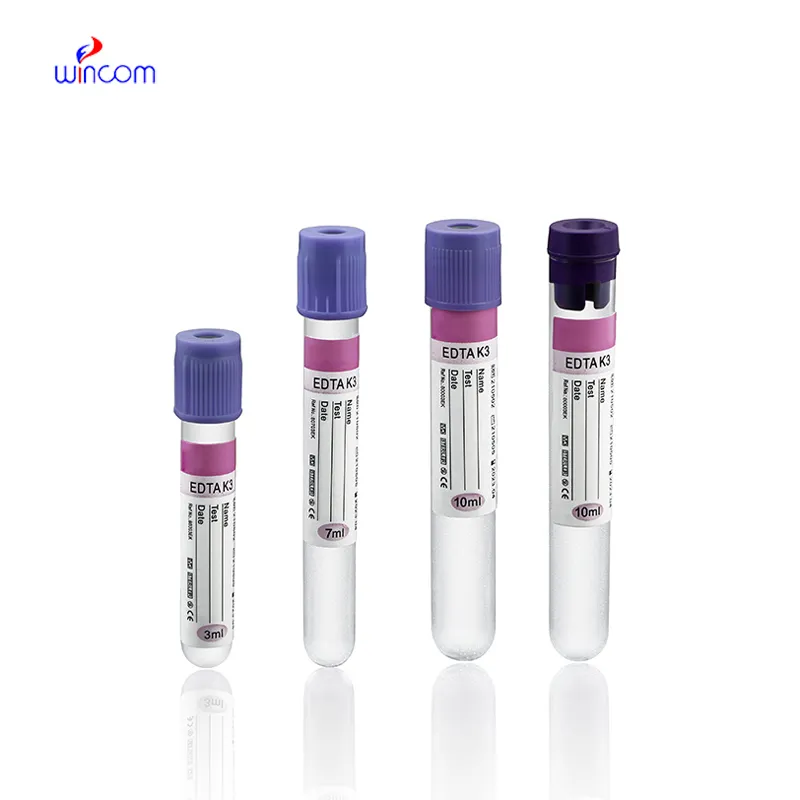
In hospitals and medical research facilities, capillary tubes for blood collection price have become a global standard for blood sampling and transport. The production of the tubes takes place under very stringent quality controls which guarantee sterility and chemical uniformity. They are employed by hospitals for a variety of diagnostic tests, such as screening for infectious diseases, performing hormone panels and routine blood counts. Their pre-filled additives allow for the prevention of clotting or degradation of components, thus maintaining the integrity of each sample. The communication with laboratory machines like centrifuges and analyzers makes the workflow smoother. The use of capillary tubes for blood collection price in different medical areas not only minimizes the chances of mistakes but also improves the safety of patients and ultimately leads to the provision of accurate test results in both hospital and research environments.

Infectious disease units utilize capillary tubes for blood collection price to obtain blood for detection of pathogens, serology, and molecular diagnostics. Their sterile construction along with chemical additives help in the stabilization of samples for the testing process thus giving accurate results. Hospital personnel place colored caps on the tubes according to a code indicating the assays to which the tubes are assigned, thus facilitating prompt processing and lessening the risk of contamination. Tubes are compatible with automated analyzers which makes them a part of the efficient workflow in high-demand environments. The use of capillary tubes for blood collection price in these units allows healthcare facilities to keep a constant and prompt detection of infections thus providing a better patient safety and support in the infection control protocols as well.
The future of capillary tubes for blood collection price will probably be characterized by the use of high-tech materials that not only improve sample preservation but also have less negative effect on the environment. It is possible that hospitals will switch to using tubes that can be broken down naturally or recycled but still have all the attributes of being sterile and chemically stable. The combination with digital tracking systems might make it possible to monitor the sample's collection, transport, and processing in real-time. These new technologies will support laboratories in their efforts to keep high throughput, provide traceability, and lower pre-analytical errors. Clinical testing requirements are getting more complicated, thus, capillary tubes for blood collection price will change in such a way as to satisfy the dual purpose of sustainability and having the precision, non-variability, and reproducibility of results in both hospital and research settings.

The care standards for capillary tubes for blood collection price prioritize sterility and environmental safety. The tubes should be stored in the original packaging until they are needed for the patient. The laboratory should have clean air supply to minimize the risk of contamination. Refreshers for the staff are done regularly to make sure everyone knows how to handle and dispose of materials correctly. Hospitals can have different storage places for tube types to reduce the possibility of mix-ups. Adhering to these maintenance guidelines, healthcare facilities are able to deliver the same quality of tubes, secure the patients' safety, and keep the laboratory diagnostics at a high level.
capillary tubes for blood collection price serve as the primary instruments in the laboratory of hospitals that guarantee safe and efficient blood sample collection. They are made to prevent sample degradation, and very often, depending on the tests, they come pre-filled with anticoagulants or clot activators. The tubes are color-coded and sized in a standard way to prevent confusion in identification. In hospital settings, proper use of capillary tubes for blood collection price leads to precise laboratory outcomes and at the same time, cuts down the risk of contamination. These tubes are indispensable in the hands of laboratory professionals and phlebotomists during a variety of diagnostic procedures, ranging from the simple complete blood count to the complex biochemical tests, thereby making them an integral part of hospital diagnostic workflows.
Q: What is the role of vacuum technology in Blood Collection Tubes? A: Enabling a gentle but efficient controlled access to collect blood. Q: Is it possible that Blood Collection Tubes may affect the findings of the results in the laboratory? A: The introduction of Blood Collection Tubes negates some opportunities for sample integrity that supports laboratory results, assuming the correct tube usage. Q: Are Blood Collection Tubes suitable for long-distance transportation? A: They are indeed, with proper handling, storage, and keeping the sample integrity intact during transportation. Q: What steps does the laboratory follow to limit the occurrences of errors related to Blood Collection Tubes? A: Such measures would involve a checklist for collecting blood tubes, separate place for test tubes, all needles, and components (color-coded), shade for answered tubes with samples that are white for identification, identifying sample containers, reordering tube trays, discard policies, labeling, color codes, or sample. Q: What is required for Blood Tube manufacturing? A: The production process must comply with the rules and regulations applicable to medical devices and diagnostics?
We’ve been using this mri machine for several months, and the image clarity is excellent. It’s reliable and easy for our team to operate.
This x-ray machine is reliable and easy to operate. Our technicians appreciate how quickly it processes scans, saving valuable time during busy patient hours.
To protect the privacy of our buyers, only public service email domains like Gmail, Yahoo, and MSN will be displayed. Additionally, only a limited portion of the inquiry content will be shown.
We’re looking for a reliable centrifuge for clinical testing. Can you share the technical specific...
Could you please provide more information about your microscope range? I’d like to know the magnif...
E-mail: [email protected]
Tel: +86-731-84176622
+86-731-84136655
Address: Rm.1507,Xinsancheng Plaza. No.58, Renmin Road(E),Changsha,Hunan,China


 EN
 af
 es
 ar
 tr
 sw
 pt
 th
 ur
 bn
 ne
 vi
 km
 lo
 de
 ru
 fi
 nl
 fa
 fr
 ko